There is nothing more important than imparting strong values into the lives of our children. It is getting tougher and tougher today, with parents giving up more and more of their authority and responsibility to the schools and the government, to be faithful to the call of bringing up our children with examples of mercy, confession, fairness and conviction. Yet, nothing can do more for a child's future than teaching them about honesty, good choices and hard work when they are still young. That is why I have started this little book called Four lessons For Willow Morgan.
 This is a story a story about decisions, wise judgment and strong convictions, about that which is right and that which is wrong.
I am writing this a bit differently than I have in the past. This time, I am writing it together with my 9 year old daughter, Selin Alicia Bradley. She is a bright, sweet and very smart young lady and loves to read. So, this is a two-fold project that gives my little girl lessons in creativity and this story can stimulate lots of children to seek more than their own self-interests, if they venture to read it.
Willow is a little girl who is growing up and who feels urges of rebellion, disobedience and disrespect starting to take hold in her life. Her mother and father recognize it and want to instill some true life lessons in her young heart.
Read chapter one, (the only one I have written thus far) and it may make you recall the times you were faced with decisions and how hard it was, at times, to do the right thing. I hope you enjoy it. The young lady playing part of Willow Daisy Morgan in the blog is my beautiful daughter, Selin Alicia Bradley.
Author of Patriot Acts Nimrod Rising StillBorn! Probable Cause
I bet you'll love it!
~~~
Chapter One
Cappadocia, Central Turkey
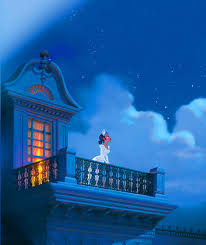 “Willow Daisy Morgan, unchanged and alive.”
“Sounds cool.” she mumbled with a twinge of mischievous glee.
Willow looked around the place and thought it felt a little creepy, but she kind of liked it. “I was stupid not to want to come here. It’s…” She paused as her eyes darted around the room and her clever little mind formed her ideas as to why something was not to her liking and how other things were just right.
 “It’s obviously something clearly … cool.” Willow thought out loud as her mind drifted back to a moment that had actually seemed to carry her to this rustic, old beautiful place with ancient old monuments of a people who lived and survived in the caves of Goreme, Turkey.
 Four Weeks Earlier
Cappadocia, Central Turkey
She wondered if it was really all her daddy’s doing, getting her to that place. “Ridiculous!” she always told herself. But she had developed some kind of ritual about asking herself why her father had brought her all the way to Central Turkey.
“He’s an Archeologist. It’s what they do.” Willow reminded herself sternly as she was getting herself ready for a perfect day, though not quite, since her daddy would not be with her; he’d be too busy on a dig somewhere in the ruins of Goreme, she knew he was special. He had a knack for reading people, sometimes perfectly sizing them up before he
 really knew him. Walter Morgan had not been stingy with his talents and had passed a portion of his gifts to her; things she was only now learning about.
“He’s somewhere watching me, I just know it.” she laughed.
He had told her it would be good for them to be together, but Willow Daisy Morgan was sure that she had talked less to her dad than she did in between his world-wide journeys. She had been almost under lock and key constantly, but she understood it was dangerous and it didn’t make her upset. What it
 did do, though was to make her probing mind try to put two and two together without the needed information. She was sure the one man she loved completely and trusted without doubt had brought her there for some reason other than he had said.
 “So, it has to be good, then.” Willow reassured herself. “He’d never do anything bad to me. I just know my daddy. And my mom, she’d kill or be killed to protect me.” Willow decided to play along, and, today was different. Willow had a free day today, and she could go out and wander in the caves of Goreme and see how people lived in a time when her habit of comfort was very seldom lived. Willow heard a knock at her door.
“Miss Morgan, you know it’s your free day. Your guide is here.” the house Butler kindly shouted through the closed door.
“Hi Franklin, I’ll be right down.” She shouted back.

 Willow pulled her boots on and her jacket. She just knew something big was on for today. It was the strangest feeling she had ever had, and it animated her ... energized her. She zipped up the jacket and put her Cubs hat on her head and got ready for … whatever. Willow walked over to the door and saw a picture on the wall suddenly tilt to the right.
 “That was weird.” Willow admitted. She walked over to the picture and reached up to straighten it. Crooked things, half-closed doors or drawers closed with bits of clothing sticking out of them made her a certain kind of crazy. It was a compulsion, but she didn’t fight it.
 Willow took hold of the picture and she felt a gust of wind brush across the left side of her face and then on her right and it seemed to swirl around her. She was afraid and wanted to scream, but instead used the words she had made herself believe would shield her from any danger.
“Willow Daisy Morgan, unchanged and alive.”
She felt its touch and then saw it swirled into a perfectly pure white mist. What scared her was that she wasn’t scared at all. “It’s too beautiful to be bad, but she knew that way of knowing if something or someone was good or not did not always work. She decided to let it show her.

The mist moved, more slowly and it took on a shape. Willow was sure she saw wings and it was massive and peaceful and had a glow that was not from power but purity, like something that had never done wrong.
“That’s better than me.” Willow told herself.
A face emerged and smiled at Willow. It stretched out its arm and touched her and it spoke. Willow knew it wasn’t speaking English, but she understood it.
“Are you Willow Daisy Morgan?”
“Come on now, you’re telling that you just barged into my room and appeared so coolly, an
 d you’re not even sure of my name?”
 “Well, I was just told to ask you that.”
“Don’t worry.” Willow said. “I know it was rhetorical.”
The white beautiful beast looked a bit confused. “It means you were being polite, right?”
The white glowing image livened and looked more confident. “Yes, that’s right. I was trying to … connect with you; I think I read your age group says that to each other, right?"
Willow rolled her eyes. “You’re an angel, aren’t you?”

“I am a Watcher, Miss Willow Daisy Morgan. I guess that is one type of Angel, according to humans.”
“Well, I think you’re cool, so just be yourself, cause I always am. I think this is what my teacher called a culturally teachable moment or something like that. But you really are very beautiful.” The Watcher’s wings glowed a bit brighter, obviously appreciating Willow’s words.
“And one more thing.” Willow said. “You can just call me Willow. It’s a lot easier, don’t you think?”
 “Indeed, Miss Willow.”
 “I didn’t say Miss Willow. I said just plain Willow.”
“But, Miss Willow, there is nothing plain about you at all.” The Watcher looked at Willow and wondered. “Oh my, none of my brothers told me I’d have one of them.”
“And what do you mean by ‘one of them?” Willow wondered. “You know, one of the stubborn ones who know everything.”
“You mean there’s bad luck in heaven?” Willow asked.
“Not until today.” the Watcher replied.
Willow looked frustrated and then they just laughed.
“I hope you’ll come back and see me soon again, but I have to go now.”
“Indeed, Willow, you do have to go … with me.”
 “With you? No way! If I am not downstairs in a couple of minutes, I am going to get so grounded.”
The Watcher touched Willows forehead and she rose up off the ground.
Willow looked down at the floor below her and started trying to protect herself again.
“Willow Daisy Morgan, unchanged and alive.” She shouted with her feet dangling in the air. “Willow Daisy Morgan, unchanged and alive.”
Willow was flaying her legs and kicking at the white beast and it shook its head and smiled. Franklin was again knocking on the door.
“Miss Morgan, are you Okay?” Willow looked over at the door and then hers and the Watcher’s eyes met.
“Willow, no one shall compel you. It is you and you alone who can decide what you wish. Doesn’t a life of greater importance interest you?” Willow stopped throwing her feet around and calmly looked at the Watcher.
“Willow Morgan, can you hear me?” Franklin asked while pounding on the door.
“Guess it’s now or never, huh?”
“I wouldn’t put it that way, because it is never too late to do good, but I know what you mean.”

 “You sure are a strange angel.”
Franklin was giving the door body slams now. “Open the door, Willow!”
 “And how many Watch…angels have you known that would give you the ability to form such an opinion of me?" Asked the Watcher as he leaped into the air.
"Come down here." Willow demanded. "I don't have time for this. Franklin's going to kill me if I don't get down there."
Franklin pounded again and again and took out his cell phone. He pressed a key into the lock.
~~~
 Willow's father, Walter Morgan was up a hill on one of the caves; digging in one of the ancient homes and collecting an ancient treasure of information. He had a cell phone to his ear and a small pick in his other hand pounding a certain stone that looked like nothing but which was precious to his professional eye. He felt the other cell phone in his pocket vibrate and threw down the pick. He took the phone read the name of the caller and spoke into the cell already pasted to his ear.
  “Honey, I am sure this is about Willow. No, don’t worry; she’s going to be fine, just like you and I were. With significance comes risk. I’ll call you back. Love you too.” He closed the cell and opened the other.
“This is Walt.”
“Sir, Miss Willow has locked herself in her room and refuses to open the door. Should I…?”
“By all means, Franklin. You can open the door.”

 Willow heard the key enter the lock. She extended her hand and the Watcher took hold of it. Franklin turned the key and suddenly, she felt herself racing upward and saw the ceiling getting closer and closer and then it was gone. They flew low and towards Israel.
 Franklin threw the door open and stepped quickly into the room. He heard a noise above him and looked up and saw nothing, but he was sure he saw a shoe, a boot that was there and then … not.

 “If I get grounded, I am gonna tell God and he’s gonna … demote you!” Willow said laughing with her hair flying backward and the wind bouncing off her face. She was very much alive and loving it.
  The Watcher looked down at Willow and she smiled with great excitement. The Watcher did as well, but knew the entire journey would not bring her joy. “Not one with her type of personality.” Some things had to be learned with difficulty and sometimes pain.
 Walter Morgan’s phone rang again. “Betty, she’s going to be alright, I promise.” He looked up and saw what only those like he, his wife and his daughter could see. Out in the horizon, headed South East, Walt Morgan saw his daughter zooming through the sky; held up by a watcher of God. “Honey, believe me, she’s well on her way.”
 Willow’s eyes again saw the present world again and left the past behind. She looked down and saw the book neatly fitted inside the box. She picked up the card again.
“Wow, that day made me a believer.” She thought.
Willow was changing. At thirteen, she was, “not a kid anymore.” She blurted out. She looked up at the ceiling and really liked the magical way the nightlight shined into the rafters above that held up the whole place.
“People are smart” she decided. “Sometimes.” She added. Willow knew that meant she didn’t need her mom and dad to tell her what to do anymore.
“I can figure things out just fine for myself, anymore.”
 Being a ‘good little girl’ at church three times a week was just not her anymore. It had all become so routine; so boring. The world just seemed so big to her now with so much to learn, both good and bad for a thirteen-year-old who did not want to play the game of being who she was not. It would be a moment of discovery. Her attitude made her feel guilty, but it was a journey she had to take.
 Willow glared out the window into the dark night sky and saw the distant flickering lights from homes down the hill of some who were not as rich as she was but who probably had more peaceful hearts than she did. She looked around the room again and walked over to her bed. Willow got down on her belly by her bed and reached under it for the box she had shoved under there right after she and her parents had arrived earlier in the day. She pulled it out and gazed down at the box that she just knew had something magical about it, because it was the only thing she could think about all through dinner. Willow knew that she had not found it by chance; the treasure, which is what Willow called it and what she thought it might lead to.
 “I just had to open it.” Willowed said quietly out loud. She recalled how her fingers sort of tingled when she touched the box, and how her hands were not her own; reaching and just taking the cover right off. It seemed … “Unavoidable, really inescapable.” Just as her fingers were doing right now.
 Willow pulled hard and the top of the box was sudden in her hands and she felt suddenly frozen; not with fear. It was some kind of understanding that she’d never be the same after this adventure. It was the kind of quest had usually only imagined
 or dreamt. Willow pinched herself to make sure it was real. The not to pleasant feeling shot up her arm that told her it was the real deal.
 Willow placed the cover on the floor and saw the same envelope on top she had not been able to muster up the courage to open the last two times she had ventured this far into whatever it was that awaited her. Then, both times she had managed to hold it up to the light and see a watermark image of the massive estate that her mom and dad brought her to on the card through the envelope. It was then that Willow knew she’d be there, somehow. So when her mother and father announced this little summer getaway, she wasn’t shocked one bit. In fact, she even pretended not to want to go so they’d make her do it all the more. She had them figured out a long time ago, but she loved them that way. Willow also knew that her mom and dad had her pretty well figured o
 ut too. She was sure they knew of her pretend life, singing, going on young people’s outings at church, but not really because she liked it. She had actually snuck away three times from church, but her mom knew it, but had not told Willow’s dad and Willow was sure her mom was smarter than her young mind liked to admit.
 Willow took the box and again held it up to the light, but felt a powerful urge and ripped it open. Willow’s hands were shaking a bit, but she still pulled out the card that was inside and seemed, in her mind, to be clamoring to get out. She took the card out and turned it over and read it. The message started with, ‘Dear Willow’. The thirteen-year-old was so rattled by seeing h
 er name there that she dropped it to the bed. Willow looked down at the box lying on the bed and her name was no longer there. That seemed to replace her fear with intrigue and disappointment, especially disappointment, in fact. Willow picked it up again and her name appeared there once more. “Isn’t that amazing?” she almost shouted. She opened it and let a scroll slide out. She unrolled it and began to read.
“Good evening to you, you’ve decided to open the box. Your interest has peaked that could not stop you from looking inside the box. You’d still look in without delay if there had been ten thousand locks.
"You’re off on a journey of discovery and an unbelievable tale. Be careful who you talk to and do watch out for their sweet and evil spell.
"You are going to see what many have not. You’re going to know, don’t forget to ask ‘what.’ I cannot assure you that you’ll come back here exactly as the same kid. Yet, it is known that if you do not take the journey, you’ll forever wish that you actually did.
 Beware of the black hearts, for they will make you the same as all of them. Look on with a full heart and become someone you have never ever been, and by the way … have fun!”
 Willow took the words into her mind and thought about the poem that had gripped her heart and mind and tantalized her. She read the rest of it.
 “Look to your right at the window and be ready to take a dive, it’s a voyage of faith that will make you know you’re alive.”
“Wait a minute!” Willow said. She got off the floor by her bed and walked over to the other side and looked down at the box and scroll card. Now it read, “Look to your left at the window and be ready to take a dive, it’s a voyage of faith that will make you know you’re alive.” Willow chuckled and giggled. Isn’t that the most awesome thing you’ve ever seen.” She almost shouted again, both a tad bit scared and totally amazed.
Willow got on her bed and looked down at the card again. “Look straight ahead at the wi
 ndow and be ready to take a dive, it’s a voyage of faith that will make you know you’re alive, and stop playing around and pay attention.” That frightened her a bit and she dropped the card, but her curious heart made her quickly pick it back up, and she pinched herself again. She was awake alright.
 “This is why I’m here.” she told herself. So, she read the rest.
"Willow Daisy Morgan, about to change and very much alive."
Patriot Acts by Steven Clark Bradley

 Where is Patriot Acts available?
This new exciting novel is easy to find and available all over the net. Here are a few links to help you secure you own copy of Patriot Acts.
Patriot Acts (Print Version) at Amazon,com
Patriot Acts (Print Version) at Cambridge Books
Patriot Acts (Electronic Version) at Ebooks on the net
Patriot Acts (Electronic Version) at Amazon.com
Patriot Acts (Electronic Version) at Fictionwise.com
Patriot Acts (Electronic Version) at Mobipocket.com
it is entertainment or the irrational rambling of a scared
American. I am not afraid; I am convinced that no one
will secure our future except us.
That is why I declare the main theme of Patriot Acts
in one key phrase:
No unconditional Talks
Just patriot Acts!
Just patriot Acts!
Author Steven Clark Bradley
From The Mind of Steven Clark Bradley
Steven Clark Bradley @ Inspired Author
Steven Clark Bradley - Nikki Leigh Virtual Book Tours
Steven Clark Bradley @ The Power of The Written Word
Steven Clark Bradley @ Communati.com
Steven Clark Bradley @ Blogtalk Radio.com
Steven Clark Bradley @ Facebook
Steven Clark Bradley @ Twitter.com
Steven Clark Bradley @ Xanga.com
Steven Clark Bradley @ Amazon.com
Steven Clark Bradley @ yuku.com
Steven Clark Bradley @ Bookmarket.com
Steven Clark Bradley @ Published Authors.com
Steven Clark Bradley @ Word That Work
Steven Clark Bradley @ Goodreads.com
Steven Clark Bradley @ Myspace.com
From The Mind of Steven Clark Bradley
Steven Clark Bradley @ Inspired Author
Steven Clark Bradley - Nikki Leigh Virtual Book Tours
Steven Clark Bradley @ The Power of The Written Word
Steven Clark Bradley @ Communati.com
Steven Clark Bradley @ Blogtalk Radio.com
Steven Clark Bradley @ Facebook
Steven Clark Bradley @ Twitter.com
Steven Clark Bradley @ Xanga.com
Steven Clark Bradley @ Amazon.com
Steven Clark Bradley @ yuku.com
Steven Clark Bradley @ Bookmarket.com
Steven Clark Bradley @ Published Authors.com
Steven Clark Bradley @ Word That Work
Steven Clark Bradley @ Goodreads.com
Steven Clark Bradley @ Myspace.com